


Pakistan has an astronaut in space. Wing Commander Muhammad Zeeshan Ali lifted off from China on Wednesday morning and docked with the Tiangong space station a few hours later, becoming the first Pakistani ever to reach orbit and the first foreign astronaut ever to board Tiangong. This is the story of the Pakistan first astronaut mission, from launch to docking and what comes next.
The flight lasted only a few hours, but it was years in the making. It follows a space cooperation agreement between Pakistan’s SUPARCO and China’s CMSA, and it comes in the 75th year of Pakistan-China ties. Here is how the day unfolded, who flew, what Ali will do in orbit, and how he gets home.
Shenzhou-24 Launch: How the Day Unfolded
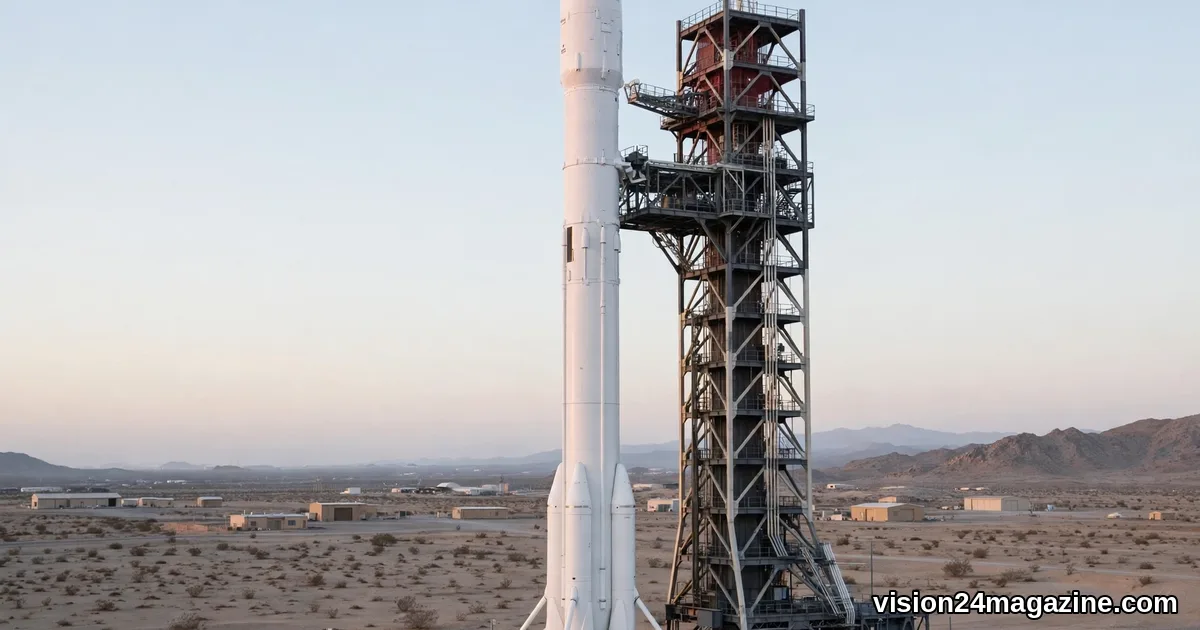
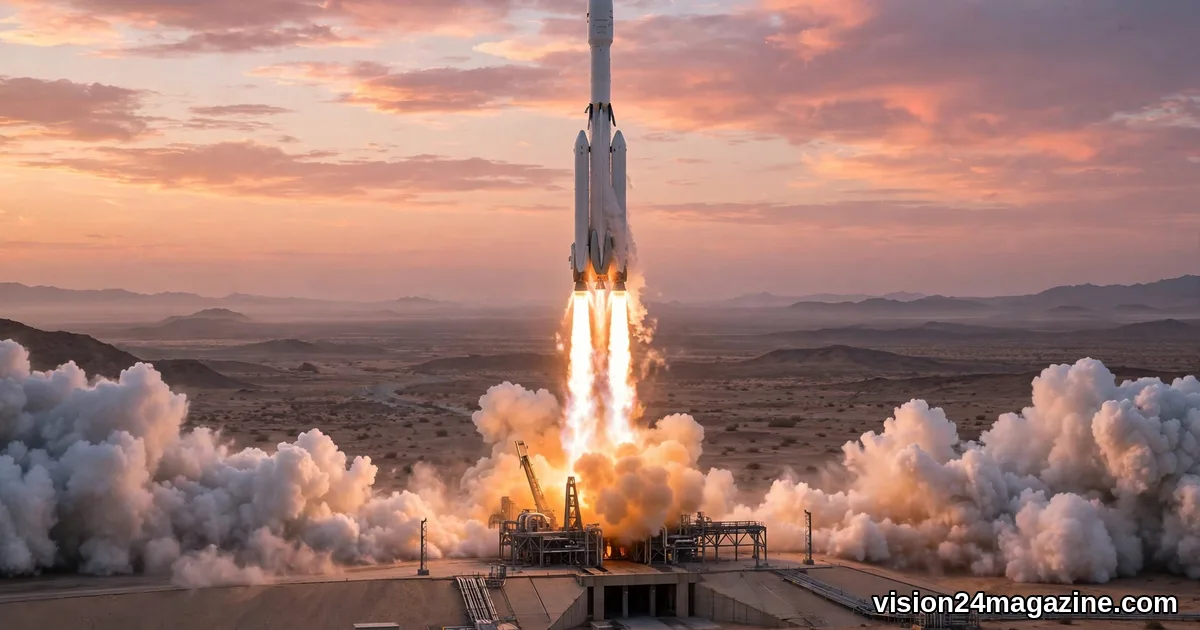
The Long March 2F rocket carrying Shenzhou-24 lifted off at 08:18 Beijing Time – 05:18 in Pakistan – from the Jiuquan Satellite Launch Centre in the Gobi Desert in north-west China. State broadcaster CCTV showed the rocket rising in a cloud of flames and smoke under a pink dawn sky. About ten minutes later the spacecraft separated from the rocket and entered its planned orbit, with the crew in good condition. The China Manned Space Agency (CMSA) declared the launch a complete success. Reuters reported the successful launch within the hour, confirming that the Pakistan first astronaut was on his way.
Jiuquan is China’s oldest launch site, and the Long March 2F is the rocket China trusts with its astronauts. It has carried every Chinese crewed mission, and Shenzhou-24 was no exception. The morning was cold and clear over the desert, and the launch went exactly to plan – no delays, no holds, no drama on the pad. For the Pakistan first astronaut, the hardest part of the day was already behind him before most of Pakistan had woken up.
Back home, the news spread fast. Prime Minister Shehbaz Sharif posted on X as the rocket climbed: “As Shenzhou-24 lifts off this morning, Nov 25, carrying Zeeshan Ali, Pakistan’s first astronaut, a new era begins for Pakistan’s space programme.” Planning Minister Ahsan Iqbal called Ali “Pakistan’s first astronaut” and said the country stood on the threshold of a historic first. Schools, newsrooms and social media followed every update, and the Pakistan first astronaut was the biggest story in the country before breakfast was over.
The crew had only been named the day before. At the press conference on 24 November, CMSA spokesperson Zhang Jingbo introduced the three astronauts, and the Pakistan first astronaut spoke in Mandarin – a language he learned during training. He quoted the Tang-dynasty poet Li Bai and told his family he would look for the lights of Pakistan first when he looked down from orbit. It was a small, human moment before a very technical day, and it travelled as fast as the launch itself.
Docking With Tiangong: Pakistan First Astronaut Aboard
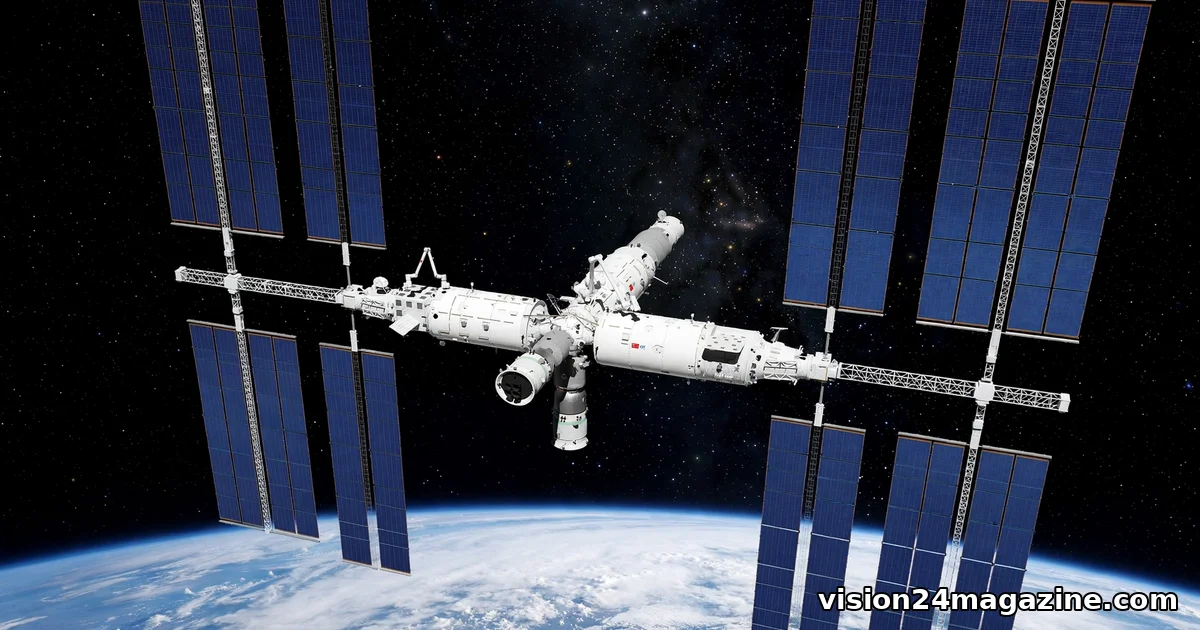
The trip from launch to the station took about three and a half hours. Shenzhou-24 flew a fast, automated rendezvous and docked with the forward port of the Tianhe core module – the heart of the Tiangong station – at 11:56 Beijing Time, or 08:56 in Pakistan. Xinhua confirmed the docking, and the three astronauts then entered the Tianhe module, where the crew already living on the station was waiting to welcome them. From that moment, the Pakistan first astronaut was officially aboard Tiangong.
Tiangong, which means “heavenly palace”, is China’s own space station, fully assembled and operational since late 2022. It circles the Earth roughly every 90 minutes, about 400 kilometres up, so the crew sees around 16 sunrises and sunsets every day. The station can host up to six astronauts when crews overlap during a handover. Until today, every person aboard had been Chinese. Dawn reported that the docking took three hours and 38 minutes from liftoff, and that Ali is now the first foreign national ever to board the station.
The timeline tells the whole story in one line: launch at 05:18 PKT, in orbit by about 05:28, docked at 08:56. In less than four hours, the Pakistan first astronaut went from the Gobi Desert to a laboratory in orbit. It was the smooth, quiet kind of success that space agencies plan for and rarely get to celebrate so cleanly.
They were not alone when they floated through the hatch. The crew already living on Tiangong – commander Zhu Yangzhu, Lai Ka-ying and Zhang Zhiyuan – was waiting to welcome them, and the station suddenly held six people. The handover is part of the plan: Zhu will stay on for a year-long mission, studying how the body copes with long stays in space, while Lai and Zhang will come home with the Pakistan first astronaut aboard Shenzhou-23. For a few days, the station holds two crews at once – the old and the new.
Meet the Crew
Three people flew on Shenzhou-24. Commander Tang Hongbo, a veteran Chinese astronaut, is in charge of the mission. Wu Yi serves as the mission’s pilot and flight engineer. And Muhammad Zeeshan Ali, 40, a Pakistan Air Force Wing Commander, flew as the payload specialist – the scientist of the crew, responsible for the experiments. The Pakistan first astronaut trained for the flight in China, learning Chinese alongside his crewmates since the spring.
Ali was chosen from two Pakistani candidates. He and fellow candidate Khurram Daud were selected in April 2026 and trained in China, and Ali was picked for the flight. He is a pilot by profession, and the mission turns that pilot into an astronaut – the first from his country. Before the launch, speaking at a press conference at Jiuquan, he said: “I carry the name of Pakistan on my shoulder, the hope of 250 million Pakistanis.” It was the line the whole country repeated all day.
Getting to that press conference took months of work. The Pakistan first astronaut trained in China since April 2026, learning the language and drilling the mission routine beside Tang and Wu until the three of them moved as one crew. Two Pakistani candidates were picked for training – Ali and Khurram Daud – and Ali was chosen for the flight while Daud stayed as backup. The Pakistan first astronaut did not just learn to fly a spacecraft; he learned to live and work in Chinese, in a team, in orbit.
The crew is a small one, and that is by design. Tang and Wu will stay on Tiangong for around six months. Ali’s stay is much shorter – a short joint flight of about a week – because his job is the science, not the long haul. The Pakistan first astronaut will work, sleep and eat beside crewmates he trained with for months, in a station where every routine is shared.
What Zeeshan Ali Will Do in Space
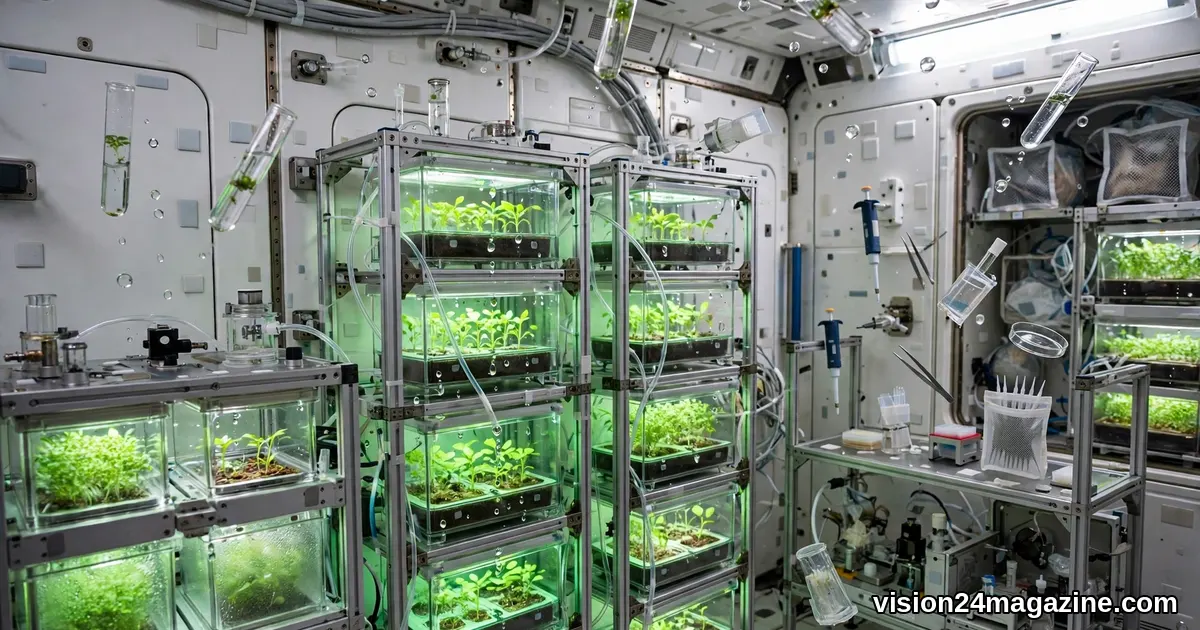
As payload specialist, Ali’s main job is the science. He will install experiment samples, run the research in orbit and work through the daily routine of the station alongside the Chinese crew. Four joint China-Pakistan projects in biotechnology and materials will run during the mission, and Ali will also carry out an in-orbit experiment on photosynthetic cyanobacteria. The Pakistan first astronaut is, in short, a working scientist for the week – not a passenger.
The experiments matter beyond the headlines. Photosynthetic cyanobacteria are tiny organisms that use sunlight the way plants do, and studying them in weightlessness helps scientists understand how living things might grow food and make oxygen on long space trips. The biotechnology and materials projects are joint work between Pakistani and Chinese researchers, chosen from proposals put forward by Pakistani universities. The Pakistan first astronaut is carrying that research into orbit with his own hands.
Daily life on Tiangong is tightly scheduled. The crew wakes, works, exercises and sleeps on a strict routine, because in weightlessness the body loses muscle and bone quickly without exercise. Ali will spend about a week aboard, and every day is planned. When his work is done, he will pack up the experiment results and prepare for the trip home – the part of the mission that matters as much as the launch.
Why do the experiments in space at all? Because weightlessness changes how things behave. Liquids mix differently, crystals grow more evenly, and tiny organisms react in ways they never do on Earth. That is why the Pakistan first astronaut’s samples matter: the results come home with him aboard Shenzhou-23, and scientists in Pakistan and China will study them for months. A week in orbit can answer questions that years in a laboratory cannot.
What This Means for Pakistan
The mission is a first in three ways at once. Ali is the first Pakistani in orbit, the first foreign astronaut to board Tiangong, and the first international crew member in China’s manned space programme. That is a lot of history for one flight, and it is why the Pakistan first astronaut mission has drawn attention far beyond Pakistan. For SUPARCO, the country’s space agency, it is the biggest moment in its history.
The flight rests on an agreement signed in February 2025 between SUPARCO and the CMSA, and it comes as Pakistan and China mark 75 years of diplomatic ties. China has been opening its space programme to partners, and Pakistan is the first country to send an astronaut to Tiangong under that cooperation. Beijing sees it as space diplomacy; Islamabad sees it as a door opening. The Pakistan first astronaut is the proof that the door is real.
Pakistan’s space programme is older than many people realise. SUPARCO was founded in 1961, and the country has put satellites in orbit before – Paksat-1R, a communications satellite, launched in 2011, and the PRSS-1 remote-sensing satellite followed in 2018. But those were machines. The Pakistan first astronaut is the first time a Pakistani has gone up with them, and that is why this flight feels different from every satellite launch before it.
Space is moving fast everywhere, not just in China. Earlier this month, SpaceX caught a returning Starship booster in a test flight, and China itself has been in the headlines for other reasons – last week, Xi, Trump and Putin held their first trilateral summit. The Pakistan first astronaut mission sits in the middle of that busy picture: a reminder that space is now a place where countries work together, compete, and make history in the same week.
For readers in Pakistan, the meaning is simpler. A Pakistani pilot trained, flew and reached orbit – and schoolchildren watching today will grow up knowing that space is not something other countries do. SUPARCO has said it hopes the mission inspires a new generation of scientists and engineers. If even a few of them follow, the Pakistan first astronaut will have done more in a week than most missions do in a year.
Frequently Asked Questions
Who is Pakistan’s first astronaut?
Muhammad Zeeshan Ali, a 40-year-old Pakistan Air Force Wing Commander. He flew as the payload specialist aboard China’s Shenzhou-24 spacecraft and is the first Pakistani in orbit and the first foreign astronaut aboard the Tiangong space station.
When did Shenzhou-24 launch and dock?
Shenzhou-24 launched on Wednesday 25 November 2026 at 05:18 PKT (08:18 Beijing Time) from the Jiuquan Satellite Launch Centre on a Long March 2F rocket. It docked with Tiangong at 08:56 PKT (11:56 Beijing Time) the same morning, about three and a half hours after liftoff.
How long will Zeeshan Ali stay on Tiangong?
About a week – between five and ten days. His two Chinese crewmates, Tang Hongbo and Wu Yi, will stay for around six months. Ali will return to Earth aboard the Shenzhou-23 spacecraft, together with two Shenzhou-23 crew members, Lai Ka-ying and Zhang Zhiyuan.
What experiments will he do in space?
He will run four joint China-Pakistan projects in biotechnology and materials, and carry out an in-orbit experiment on photosynthetic cyanobacteria. As payload specialist he will install the samples and conduct the research in microgravity.
Why is this mission historic for Pakistan?
Because it is a triple first: the first Pakistani in orbit, the first foreign astronaut on Tiangong, and the first international crew member in China’s manned space programme. It follows a 2025 space cooperation agreement between SUPARCO and China’s CMSA.
Conclusion
In one morning, Pakistan went from a country that watches space to a country that flies in it. The Pakistan first astronaut launched at dawn, docked before lunch, and is now working aboard Tiangong – the first Pakistani in orbit and the first foreign astronaut on China’s station. His week in space is short, but the door it opens is not.
Watch for the return next week, when Ali comes home aboard Shenzhou-23. Until then, the Pakistan first astronaut is doing what astronauts do: working, experimenting, and looking down at the country that sent him up.
