


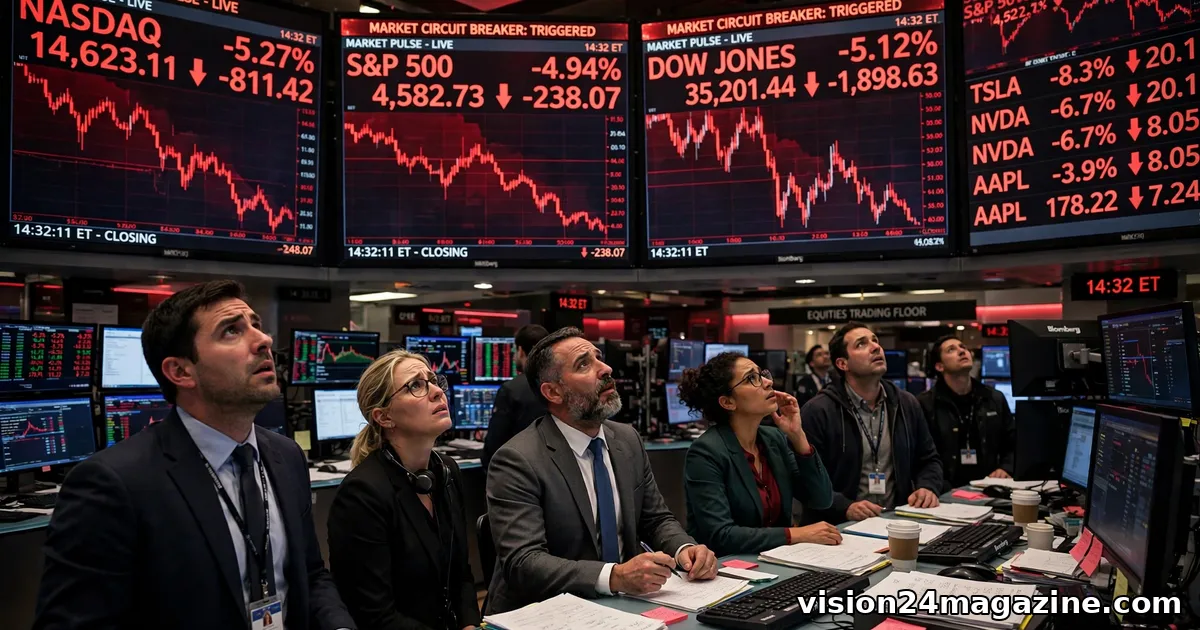
The Nvidia SEC probe landed on a Friday and wiped nearly $500 billion off the chip giant in a single day. Behind that number is a messier story: the US Securities and Exchange Commission is reportedly looking into how Nvidia recognises revenue and what it tells investors, California’s attorney general has served the company a subpoena, and its co-founder has just resigned as chief executive. None of this means Nvidia has done anything wrong. An investigation is not evidence of wrongdoing, and the probe itself is reported, not confirmed on the record. But the questions it raises go to the heart of the AI boom, so this article explains what is known, what is only reported, and what comes next.
What Is the Nvidia SEC Probe?
The Nvidia SEC probe began, at least in public, with two news reports. The Wall Street Journal reported on Tuesday 17 November 2026 that the SEC is investigating Nvidia. Then, on Friday 20 November, Reuters reported that Nvidia’s accounting is a focus of the investigation, citing two unnamed sources. The SEC has declined to comment, and Nvidia did not immediately respond. So the first thing to understand about the Nvidia SEC probe is that it is a reported investigation, not a confirmed one — and everything that follows should be read with that in mind.
What is the SEC reportedly examining? According to Reuters, the focus is potential accounting issues, including revenue recognition and disclosure — in plain language, how Nvidia counts its money and whether what it tells investors gives a fair picture. The report names three specific angles. The first is geographic revenue: Nvidia changed how it reports where its sales come from, and it stopped breaking out Singapore, even as Singapore-billed sales grew to nearly half of global revenue. The second is what Reuters calls “circular” AI financing deals. The third is the backdrop of US investigations into Megaspeed, a Singapore-based cloud customer investigated over alleged shipments of Nvidia chips to China.
This is not Nvidia’s first run-in with the SEC. In 2022, the company paid a $5.5 million penalty after the SEC found it had failed to adequately disclose that crypto mining was a significant factor in its gaming revenue. That case was settled without Nvidia admitting or denying the findings, and it was small money for a company of Nvidia’s size. The Nvidia SEC probe is different in scale and in subject: it touches the core of how the company reports the revenue that made it the most valuable company in the world — until last week, at least.
It is worth pausing on one point, because it gets lost in the noise. A regulator asking questions is a normal part of how markets work, and investigations often close without any action being taken. The Nvidia SEC probe could end that way too. What makes it big news is not the probe alone, but the timing: it arrived in the same month as a chief executive’s resignation, a second regulator’s subpoena, and a share price already sliding fast.
Why Nvidia Shares Crashed 14% in a Day
Friday 20 November was a brutal day for Nvidia shareholders. The stock closed at $125.53, down $20.45 — a fall of 14.01 percent — from Thursday’s close of $145.98. It touched an intraday low of $124.50, and after hours it recovered only part of the loss, to $130.01. Nearly $500 billion of market value vanished in that single session, and about $901 billion over the week as a whole.
The Motley Fool called it a crash, and the numbers back that up: the stock is down about 33 percent in November alone, and about 45 to 47 percent from its record close of $239.24 on 6 October 2026. It had not closed this low since 12 May 2025.
The Nvidia SEC probe was the trigger, but it was not the whole story. Shares were already down more than 6 percent before the Reuters report hit on Friday, then extended the fall to 14 percent by the close. The wider market was selling AI hardware too: AI hardware stocks fell about 19.5 percent in the week, according to TECHi. So the Nvidia SEC probe hit a market that was already nervous, and it turned a bad day into a historic one.
The fall also rewrote the league table. Moneycontrol reported that Nvidia has fallen behind Alphabet and is now the fourth-most-valuable US company, behind Apple, Microsoft and Alphabet. Not long ago it sat at number one. That is how fast a reputation built on AI can change when the questions shift from growth to governance.
It was also the seventh consecutive weekly decline for the stock — the longest losing streak since 2008 — and the week was down about 22.9 percent. For readers, the honest takeaway is simple: the Nvidia SEC probe did not create the slide on its own, but it gave a falling market a reason to fall faster. And because Nvidia’s chips power most of the world’s AI systems, a bad week for Nvidia is read, rightly or wrongly, as a bad week for the whole AI story.
The Singapore Question: Where Does Nvidia’s Money Come From?
If there is one part of the Nvidia SEC probe that puzzles ordinary readers, it is the Singapore question. Why would a regulator care where a company says its sales come from? The answer is that geography can hide a lot — and in Nvidia’s case, the numbers are large enough to matter.
Here is what Reuters reported: Nvidia changed how it reports geographic revenue, and it stopped breaking out Singapore as a separate line, even as Singapore-billed sales grew to nearly half of global revenue. That does not mean the money is fake, and it does not mean Nvidia broke any rule. Companies change how they report segments for all kinds of legitimate reasons. But when nearly half of your revenue is billed through one small country, and you stop showing that number separately, regulators and investors start asking why — and the Nvidia SEC probe is, at least in part, those questions made formal.
The Singapore question also connects to a second, sharper issue: where the chips actually end up. The United States restricts exports of advanced AI chips to China, and the scrutiny around the Nvidia SEC probe sits alongside US investigations of Megaspeed, a Singapore-based cloud firm investigated over alleged shipments of Nvidia chips to China. The question at the centre of both is whether chips billed in one place ended up somewhere they were not supposed to go. Again, that is a question, not a finding — but it is the kind of question that can turn an accounting probe into something much bigger.
Then there are the “circular” AI financing deals reported by Reuters. The phrase describes arrangements in which money flows in a circle — one company funds another, which buys the first company’s products, which makes the first company’s sales look stronger. Nothing in the reporting says Nvidia did this, and the details have not been made public. But the idea matters because the AI boom runs on exactly this kind of interlocking deal: chip makers, cloud providers and AI labs all buying from and investing in each other. If the Nvidia SEC probe digs into those arrangements, its findings could reach well beyond one company.
For now, the Singapore question has no answer in public. Nvidia has not explained the reporting change in the context of the probe, and the SEC has said nothing at all. What readers should watch is simple: whether Nvidia restores the Singapore breakdown in its next filings, and whether any official statement from the company or the SEC clarifies what is actually being examined.
California’s Subpoena: A Second Front
The Nvidia SEC probe is not the only investigation Nvidia faces. On Thursday 19 November 2026 — the day before the Reuters report — California Attorney General Rob Bonta served Nvidia an investigative subpoena. A subpoena is not a charge and not a finding of wrongdoing. It is a formal demand for information, and it means a second regulator, in a second jurisdiction, is asking its own questions.
Bonta’s words were blunt. In the official release from his office, he said: “My office is investigating whether Nvidia or Jensen Huang’s actions resulted in China obtaining advanced chips or confidential information — and if Nvidia misled investors and the public about this risk, in violation of the law.” He also said the conduct raises “bright red flags”. That is strong language from a state attorney general, and it is worth quoting exactly, because it shows how seriously California is taking the matter.
The scrutiny follows reported allegations about Huang’s relationship with Alice Huang, a businesswoman suspected of links to Chinese intelligence, connected to Megaspeed, the Singapore-based cloud firm under investigation. These are allegations, not findings, and they have not been tested in any court. But they explain why California’s questions focus on whether advanced chips or confidential information reached China, and whether investors were told the truth about that risk.
The California subpoena matters for a second reason too: it shows the Nvidia SEC probe is part of a wider pattern, not an isolated event. When two regulators move in the same week, on overlapping questions, companies face a longer and harder process than when one regulator asks questions alone. Nvidia now has to answer both, in parallel, while running a company in the middle of the biggest technology shift in a generation.
Jensen Huang’s Exit and the Leadership Question
The Nvidia SEC probe did not arrive in a vacuum. It arrived weeks after the company’s co-founder, Jensen Huang, resigned as chief executive on 11-12 November 2026. Huang built Nvidia from a graphics-chip maker into the company at the centre of the AI boom, and his departure alone would have been one of the biggest business stories of the year. Coming just before the probe became public, it changed the whole picture.
CFO Colette Kress is now interim CEO, and she has moved fast. Nvidia reported its third-quarter results for fiscal 2027 on 17 November — the first report since Huang resigned — and the numbers were strong: revenue of $115.8 billion, up 103 percent year on year, earnings per share of $2.68 against a consensus of $2.47, data centre revenue of $107.6 billion, and fourth-quarter guidance of $130 billion. Kress also raised the fiscal 2027 outlook by 75 percent. On the numbers alone, the business is still growing fast.
But the board has also launched an independent investigation, and it has said Huang will not return as chief executive. That is a clear signal: whatever the board’s investigation finds, the company is moving on without its founder at the top. For investors, that creates a second layer of uncertainty on top of the Nvidia SEC probe — not just what the regulators will find, but who will lead the company through it.
Congress is now involved too. Huang is scheduled for a transcribed interview on 1 December 2026 before three House committees — the Permanent Select Committee on Intelligence, the Foreign Affairs Committee, and the Select Committee on the Chinese Communist Party. Nvidia’s general counsel, Tim Teter, appears the following day. House Democrats have also launched their own investigation and asked for answers and documents by 1 December, including whether Nvidia tried to influence the Megaspeed investigation. December, in other words, will be a busy month for everyone involved in the Nvidia SEC probe.
What This Means for AI and for Readers
So what does the Nvidia SEC probe actually mean? Start with what it does not mean. It does not mean AI is finished, and it does not mean Nvidia’s chips have stopped working. The company’s third-quarter numbers show demand is still enormous, and Gartner forecasts that worldwide AI spending will reach $2.7 trillion in 2026. The technology is real, and the spending is real. What the Nvidia SEC probe puts in doubt is something narrower but still important: how much of the boom is built on solid ground, and how much on deals and disclosures that do not stand up to close inspection.
That question matters beyond Nvidia. The AI industry is tightly linked: chip makers sell to cloud providers, cloud providers rent computing power to AI labs, and AI labs raise money from investors who believe the whole chain will keep growing. When the biggest company in that chain faces an accounting probe, everyone in the chain gets asked harder questions. The Friday sell-off showed that clearly — it was not just Nvidia that fell, but AI hardware stocks across the board.
For readers, the practical lesson is about how to follow a story like this. The Nvidia SEC probe is reported, not confirmed. The SEC has declined to comment. Nvidia has not responded. California’s subpoena is real, but a subpoena is a demand for information, not a verdict. The honest position right now is to wait for facts: the next filings, the December congressional interviews, and any statement from the regulators. Anyone who tells you today that they know how the Nvidia SEC probe will end is guessing.
There is one wider point worth making. Even as Nvidia falls, money is still pouring into AI. Anthropic, the AI company behind the Claude assistant, listed on the Nasdaq in November 2026 at $83 a share and raised about $119.5 billion in total — the largest IPO ever.
That contrast tells the real story of this moment: the AI boom is not over, but it is no longer a story in which every company rises together. Some will be tested, and the Nvidia SEC probe is the biggest test yet. For more on the technology shaping this story, see our Tech section, and for how AI is changing the work around these chips, read our piece on how AI is changing work. The Galaxy S28 shows the same AI shift reaching the phone in your pocket.
One last note, and it matters: this article is not investment advice. It does not tell you to buy or sell Nvidia shares, or any shares at all. Share prices move on news, rumours and fear as well as on facts, and a single Friday can look very different a month later. What this article does is lay out what is known about the Nvidia SEC probe so you can follow the story yourself, with the facts in front of you.
FAQs
What is the Nvidia SEC probe about?
The Nvidia SEC probe is a reported US Securities and Exchange Commission investigation into Nvidia’s accounting. Reuters reported on 20 November 2026, citing two unnamed sources, that the SEC is examining potential accounting issues including revenue recognition and disclosure. The SEC has declined to comment and Nvidia has not responded, so the probe is reported, not confirmed on the record.
Has Nvidia done anything wrong?
No finding has been made, and no charges have been filed. An investigation is not evidence of wrongdoing, and investigations often close without any action. The Nvidia SEC probe is at the stage of reported questions — about revenue reporting, Singapore-billed sales and financing deals — not conclusions.
Why did Nvidia shares fall 14% on Friday?
Nvidia closed at $125.53 on Friday 20 November 2026, down 14.01 percent from Thursday’s $145.98, after the Reuters report on the Nvidia SEC probe. Shares were already down more than 6 percent before the report, and the wider AI hardware sector was selling off too, so the probe was the trigger for a fall that was already under way.
What did California ask Nvidia?
On 19 November 2026, California Attorney General Rob Bonta served Nvidia an investigative subpoena. His office is investigating whether Nvidia or Jensen Huang’s actions resulted in China obtaining advanced chips or confidential information, and whether Nvidia misled investors and the public about that risk. A subpoena demands information; it is not a charge.
What happens next in the Nvidia SEC probe?
The next dates to watch are in December. Jensen Huang is scheduled for a transcribed interview on 1 December 2026 before three House committees, and Nvidia’s general counsel Tim Teter appears on 2 December. House Democrats have asked for answers and documents by 1 December. Watch also for Nvidia’s next financial filings and any statement from the SEC or the company.
Conclusion
The Nvidia SEC probe is the biggest test the AI boom has faced. A reported accounting investigation, a 14 percent single-day crash, a California subpoena and a founder’s resignation have arrived together, and they have knocked Nvidia from the top of the world’s most valuable companies to fourth place. Yet the business underneath is still growing fast, and the AI spending behind it has not stopped. What happens next depends on facts that are not public yet — and until they are, the honest answer is to watch, not to guess.
