


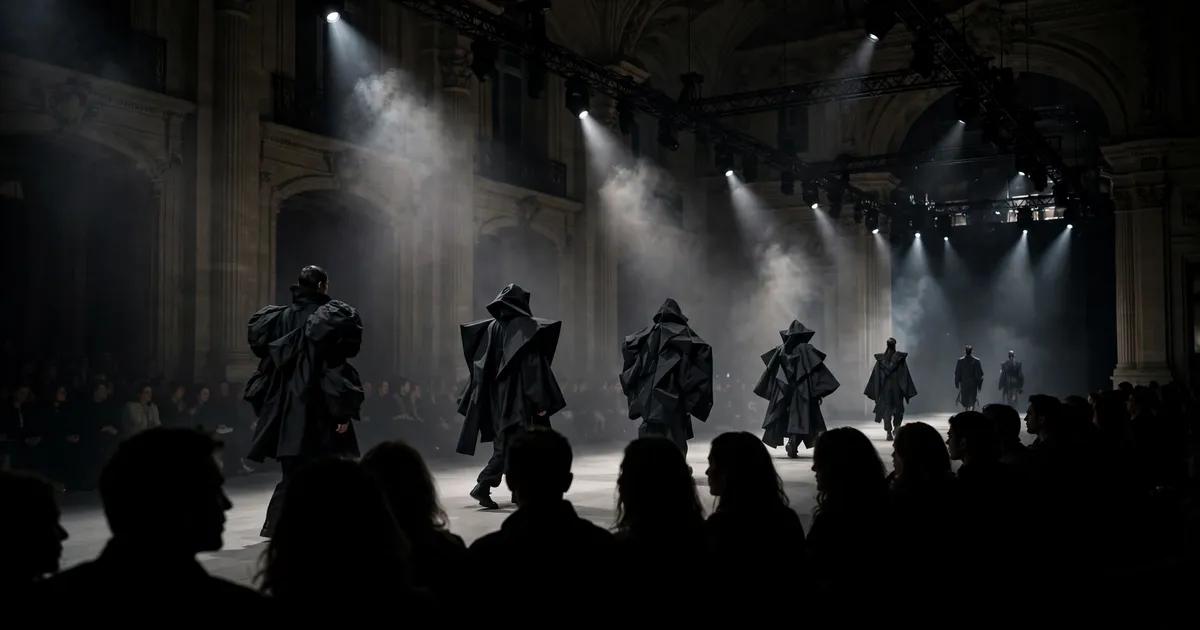
Today is Martine Rose’s first day at Balenciaga. The appointment was announced ten days ago, but 16 November is the date Kering put on it, and today it becomes real. Rose walks into the Paris house as its new creative director — the first woman to hold the job in Balenciaga’s 109-year history, and the first Black woman to do so.
For a house that spent the last decade as fashion’s loudest provocateur, the choice is a sharp turn. Rose built her name in London menswear, drawing on subcultures, music and streetwear, far from Paris couture salons. Balenciaga has hired her anyway, and handed her all of it. What happens next is the most interesting question in fashion this winter.
A first in 109 years
Cristóbal Balenciaga founded the house in San Sebastián in 1917. It moved to Paris twenty years later, in 1937, and in all the decades since — through the couture years, the revival, the Demna era — no woman had ever led it creatively. Rose is the first.
She is also the first Black woman to hold the job, and only the second Black woman to lead a major European luxury house, after Grace Wales Bonner took over menswear at Hermès in 2025. Both are British. Both came up through London. That is not a coincidence worth ignoring, but it is also not the whole story. Rose got this job because of what she has made, not where she is from.
Kering, Balenciaga’s parent company, announced the appointment on Friday 6 November. Rose is based in Paris, and her brief covers the house’s overall creative direction — every collection, every category. Her own words on the announcement were careful and warm: “It is a true privilege to be appointed creative director of Balenciaga, a house with an extraordinary heritage and a fearless creative spirit. Balenciaga has been shaped by remarkable creative talents before me. I am committed to honouring this legacy and look forward to creating the next chapter in this rich and beautiful story.”
The road back to Balenciaga
This is not Rose’s first time inside the building. She worked there before, as a menswear consultant under Demna from 2015 to 2018, and she helped shape the look that defined that era.
Demna recruited her as Balenciaga prepared to put menswear on the runway for the first time. She brought the eye she had developed on her own label: familiar, everyday clothing pushed into exaggerated proportions and unconventional silhouettes. Cropped bomber jackets with ultra-wide shoulders. Deliberately understated tracksuits. Suit jackets cut in ways that made people look twice. The oversized codes that became Balenciaga’s signature in those years carry her fingerprints.
Her return now is a different job entirely. The consultancy was menswear, and Demna kept overall creative control. This time she runs the house.
She succeeds Pierpaolo Piccioli, whose departure was announced on 5 November, a day before her appointment. The former Valentino creative director had been at Balenciaga less than sixteen months, joining in July 2025 after Demna left for Gucci. In that time he presented three ready-to-wear collections and one couture collection. Kering gave no reasons for his exit, thanking him for reaffirming Balenciaga’s couture origins through craftsmanship, construction and creativity. One day later, Rose was his successor. Fashion moves fast. This was faster than most.
From a £2,000 loan to the top of Paris fashion
Rose is 45, British-Jamaican, from Croydon in south London. She founded her eponymous label in 2007 and built it around the things she grew up with: British subcultures, music, streetwear, the social codes of how people actually dress. Her shows became known for casting that looked like London itself, and for clothes that treated ordinary garments — a shirt, a jacket, a pair of trousers — as raw material for something stranger.
The start was not glamorous. She launched the label with a $2,000 Prince’s Trust loan, roughly £1,488, and worked in bars while designing in her spare time. The business did not cover her rent at first. In a 2021 British Vogue interview she described what the Balenciaga consultancy meant to her: “That really changed my life. Demna was so brave in giving me a real shot. Up until that point, I was basically squatting. It gave me the chance to actually do something, to put it all back into my own label and make a proper jump forward. It also gave me confidence.”
That is the arc Kering is buying into: a designer who built a label from nothing, who understands how clothes work on real people, and who has already spent three years inside the house she is now being asked to lead. She has also been broadening her range. Rose has produced co-ed collections since 2023, which matters, because the job she starts today is not a menswear job. It is everything.
What she walks into
Rose is not inheriting a house at its peak. Kering’s third-quarter results, reported around the appointment, showed group revenue flat as reported and down 1% on a comparable basis. Its Fashion & Leather Goods division fell 3% on a comparable basis. Inside Balenciaga, leather goods stayed resilient while ready-to-wear and shoes kept facing challenges. Those are the numbers behind the decision to change creative directors twice in eighteen months.
Kering chief executive Luca de Meo framed the appointment as a bet on culture rather than on caution. “Balenciaga has always been a house of radical creativity, challenging conventions and redefining the boundaries of fashion,” he said. “Martine Rose embodies this spirit with a fresh, fearless and deeply contemporary vision.” He added that her connection with younger generations and her instinctive understanding of culture would bring “a new dimension to the house”.
The commercial plan behind the hire is already visible. Vogue Business’s coverage of the appointment pointed to plans to double women’s ready-to-wear by 2030 and accelerate leather goods growth over the same period. That is a telling pair of targets for a designer whose reputation was built mostly in menswear. Kering is asking Rose to grow the part of the business she has spent the least time on, and to do it while keeping the house’s edge intact. It is a big ask, and it is also the job.
Her own label, and a difficult year
Rose arrives at Balenciaga after a bruising year with her own label, and that story is part of the appointment too.
Tomorrow, the fashion distributor, acquired a majority stake in Martine Rose in 2021, in a deal that included an equity stake for Rose herself and was meant to fund the label’s international growth. Relations between the two sides became strained earlier this year. In March, Rose announced she would not produce her autumn/winter 2026 collection. Tomorrow said it would proceed with the collection anyway. Vogue Business reported that she had been in dispute with the company over the handling of her brand.
The dispute sits inside a wider mess. Tomorrow has faced further scrutiny after the closure of Coperni, which ceased operations the same week as Rose’s appointment after its founders failed to resolve a dispute with the company over unpaid sums. None of this is Rose’s doing, but it is her context: she starts at Balenciaga while the business behind her own name is in open conflict with its backer. The Paris job, whatever its pressures, is at least a clean slate.
A shake-up across Kering — and what happens next
Rose’s appointment is not happening in isolation. It is part of the widest creative shake-up Kering has attempted in years.
Anthony Vaccarello has left Saint Laurent. Seán McGirr has departed Alexander McQueen. Successors for both houses have yet to be announced, and several women are reportedly in the running for the two roles. If those appointments go the same way, Kering could end the year with women leading the majority of its houses — a striking change for a group whose biggest brands have been run almost entirely by men.
That matters beyond the symbolism. Creative directors set the tone for everything a luxury house does, from the clothes to the campaigns to the stores. A group that changes three of its houses at once is not tinkering. It is betting that a different kind of leadership will sell more clothes. Rose is the first and biggest piece of that bet, and the one the rest of the industry will be watching most closely.
The obvious question has no answer yet. Kering’s announcement gave no date for Rose’s first Balenciaga collection, and the house has said nothing about when she will show. The fashion calendar will supply the candidates soon enough, but for now, the timetable is hers to set.
That silence is worth reading carefully. A new creative director’s first collection is the most scrutinised show in fashion, and Rose has time to get it right. She knows the house from the inside, she knows the ateliers and the codes, and she has spent nearly twenty years building a point of view that is entirely her own. The risk for Balenciaga is not that she will be too cautious. It is that she will change things so much that the house’s existing customers do not recognise it anymore. The risk for Rose is the opposite: that the weight of a 109-year-old house, and the commercial targets attached to it, will flatten what made her interesting in the first place.
Both risks are real. Both are also the reason this appointment is worth paying attention to. The safest choice Kering could have made was a designer who would keep things roughly as they were. They made the other choice.
Frequently Asked Questions (FAQs)
Who is Martine Rose?
Martine Rose is a 45-year-old British-Jamaican designer from Croydon, London. She founded her eponymous menswear label in 2007 and previously worked as a menswear consultant at Balenciaga from 2015 to 2018.
When does Martine Rose start at Balenciaga?
She officially takes up the Paris-based creative director role on 16 November 2026, ten days after Kering announced her appointment.
Who did Martine Rose replace at Balenciaga?
She succeeds Pierpaolo Piccioli, whose departure was announced on 5 November 2026 after less than sixteen months in the role. Piccioli had joined in July 2025, succeeding Demna.
Why is Martine Rose’s appointment historic?
She is the first woman to lead Balenciaga creatively in the house’s 109-year history, and the first Black woman to hold the role. She is only the second Black woman to lead a major European luxury house, after Grace Wales Bonner at Hermès menswear.
When will Martine Rose show her first Balenciaga collection?
No date has been announced. Kering’s appointment statement did not specify when her first collection would be presented.
Conclusion
Martine Rose starts at Balenciaga today as the first woman to lead the house in 109 years, and she does so with a brief no creative director has carried there before: grow the womenswear, keep the edge, and do it while the group around her changes its leadership at the same time. She has the inside knowledge, the London eye and the record to suggest she can. Her first collection, whenever it comes, will tell us whether Kering’s gamble pays off — and whether the most interesting designer in British menswear can run the biggest job in Paris fashion.
More on Vision24:
Fashion · Business · News
Sources:
TheIndustry.fashion · Fashion Times UK
